Every cyber attack begins with access.
If an attacker can log in — even with stolen credentials — they can bypass many traditional security defenses.
This is why controlling who can access your systems, data, and applications is one of the most critical parts of cybersecurity.
This is where Identity and Access Management (IAM) comes in.
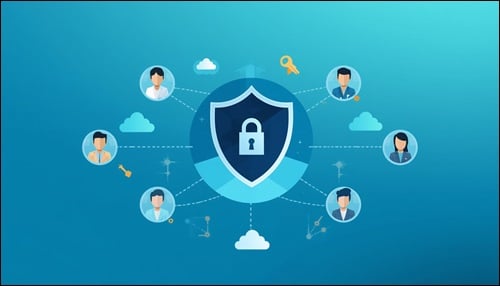
IAM ensures that the right people have the right access to the right resources — and nothing more.
In this guide, you’ll learn what IAM is, how it works, its components, benefits, risks, and best practices.
What Is Identity and Access Management (IAM)?
Identity and Access Management (IAM) is a framework of policies, technologies, and processes used to manage digital identities and control access to resources.
It ensures that only authorized users can access specific systems or data.
IAM is widely used in organizations to secure applications, networks, and cloud environments.
For technical reference, see this IAM guide
Simple Explanation
IAM works like a security guard at a building.
It checks who you are and decides what areas you are allowed to enter.
Why IAM Is Important
Without proper access control, systems become vulnerable to unauthorized access and data breaches.
1. Prevent Unauthorized Access
Ensure only verified users can log in.
2. Protect Sensitive Data
Limit access based on roles.
3. Support Compliance
Meet regulatory requirements.
4. Reduce Insider Threats
Control user permissions carefully.
IAM is a core component of modern cybersecurity strategies.
How IAM Works
IAM systems follow a structured process.
1. Identification
Users provide credentials (username, email, etc.).
2. Authentication
Verify identity using passwords, OTP, or biometrics.
3. Authorization
Determine what resources the user can access.
4. Access Management
Control and monitor access over time.
This process ensures secure and controlled access.
Key Components of IAM
Authentication
Verifies user identity.
Authorization
Defines access permissions.
User Management
Manages user accounts and roles.
Single Sign-On (SSO)
Allows users to access multiple systems with one login.
Multi-Factor Authentication (MFA)
Adds extra security layers.
These components work together to secure access.
IAM vs Authentication vs Authorization
- Authentication: Verifies identity
- Authorization: Grants permissions
- IAM: Manages both processes
IAM integrates these functions into a unified system.
Types of IAM Solutions
On-Premise IAM
Managed within local infrastructure.
Cloud-Based IAM
Managed through cloud platforms.
Hybrid IAM
Combines both approaches.
Organizations choose based on their needs.
Benefits of IAM
Improved Security
Reduces unauthorized access.
Better User Experience
Simplifies login with SSO.
Centralized Control
Manage access from one system.
Regulatory Compliance
Supports audit requirements.
IAM strengthens overall security posture.
Common IAM Risks
- Weak passwords
- Overprivileged accounts
- Misconfigured access controls
- Lack of monitoring
These risks can lead to serious security incidents.
IAM and Cloud Security
IAM plays a critical role in cloud environments.
It controls access to cloud resources and ensures secure operations.
Learn more about securing cloud environments in our cloud security guide
Best Practices for IAM
Use Strong Authentication
Enable multi-factor authentication.
Apply Least Privilege Principle
Grant only necessary access.
Regularly Review Access
Remove unnecessary permissions.
Monitor User Activity
Detect suspicious behavior.
Automate Access Management
Improve efficiency and security.
Following these practices enhances security significantly.
Future of IAM
IAM is evolving with new technologies.
- Biometric authentication
- AI-based access control
- Passwordless authentication
- Zero Trust integration
These advancements will shape the future of identity security.
Conclusion
Identity and Access Management (IAM) is a critical part of modern cybersecurity.
It ensures that only authorized users can access sensitive systems and data.
As cyber threats continue to evolve, strong IAM practices are essential for maintaining security.
Implementing IAM effectively can significantly reduce security risks.
Frequently Asked Questions
What is IAM in cybersecurity?
It manages user identities and access permissions.
Why is IAM important?
It prevents unauthorized access.
What is MFA in IAM?
Multi-factor authentication adds extra security.
Is IAM used in cloud security?
Yes, it is essential for cloud environments.
What is the principle of least privilege?
Users get only the access they need.
Call to Action
Strengthen your cybersecurity by implementing IAM to control access, protect data, and prevent unauthorized entry into your systems.