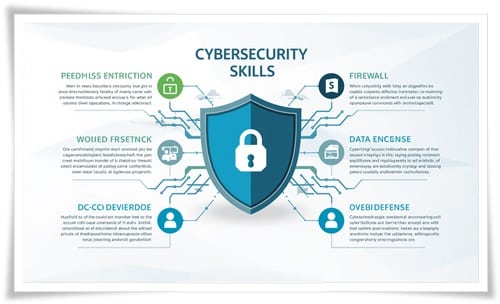
Cybersecurity is one of the fastest-growing industries in the world, with companies constantly looking for skilled professionals to protect their systems and data.
But the biggest question beginners ask is: which cybersecurity skills should you actually learn?
In this guide, you will discover the most important cybersecurity skills in 2026, including technical skills, practical abilities, and real-world requirements.
Why Cybersecurity Skills Matter
Cyber threats are increasing every year, and organizations need professionals who can identify vulnerabilities, prevent attacks, and respond to incidents.
To succeed in cybersecurity, you need a combination of technical knowledge and practical skills.
According to industry research, cybersecurity professionals must develop both technical and workplace skills like communication and problem-solving to succeed in real-world roles. :contentReference[oaicite:0]{index=0}
Top Cybersecurity Skills You Must Learn
1. Networking Fundamentals
Networking is the foundation of cybersecurity. You must understand how systems communicate over the internet.
- TCP/IP, DNS, HTTP/HTTPS
- Ports and protocols
- Firewalls and routers
Without networking knowledge, cybersecurity concepts will not make sense. :contentReference[oaicite:1]{index=1}
Learn basics here: network security
2. Linux Skills
Most cybersecurity tools run on Linux systems, especially for ethical hacking.
- Command line usage
- File system management
- System configuration
Linux is essential for penetration testing and security analysis. :contentReference[oaicite:2]{index=2}
Start here: linux for hackers
3. Understanding of Cyber Attacks
You must understand how attackers think and operate.
- Phishing attacks
- Ransomware
- Man-in-the-middle attacks
This helps in identifying and preventing threats effectively.
Learn attacks here: types of cyber attacks
4. Penetration Testing & Ethical Hacking
Ethical hacking skills allow you to find vulnerabilities before attackers do.
- Footprinting
- Scanning
- Enumeration
These are core phases of penetration testing used in real-world security assessments. :contentReference[oaicite:3]{index=3}
Start here: ethical hacking guide
5. Programming & Scripting
Programming helps automate tasks and build security tools.
- Python (most important)
- Bash scripting
- JavaScript (for web security)
Scripting is widely used to automate security operations and improve efficiency. :contentReference[oaicite:4]{index=4}
6. Security Tools Knowledge
Cybersecurity professionals must know how to use industry tools.
- Nmap
- Wireshark
- Metasploit
- Burp Suite
These tools are used for vulnerability assessment and penetration testing. :contentReference[oaicite:5]{index=5}
7. Cloud Security
Cloud computing is widely used, so securing cloud systems is essential.
- AWS, Azure basics
- Cloud misconfigurations
- Identity and access management
Cloud security is becoming a critical skill in modern cybersecurity. :contentReference[oaicite:6]{index=6}
Learn more: cloud security
8. Risk Management & Security Fundamentals
Cybersecurity is not just about hacking—it’s about managing risk.
- CIA triad (Confidentiality, Integrity, Availability)
- Security policies
- Access control
Professionals must understand risks and prioritize security efforts effectively. :contentReference[oaicite:7]{index=7}
9. Problem-Solving & Analytical Thinking
Cybersecurity requires strong analytical skills.
- Identify threats
- Analyze vulnerabilities
- Investigate incidents
These skills help professionals respond to complex cyber attacks.
10. Communication Skills
Cybersecurity professionals must explain technical issues clearly.
- Report writing
- Team collaboration
- Incident documentation
Communication is essential for working with teams and management. :contentReference[oaicite:8]{index=8}
Beginner Roadmap to Learn Cybersecurity Skills
- Start with networking basics
- Learn Linux and operating systems
- Understand cyber attacks
- Practice ethical hacking
- Learn programming
- Work on real-world labs
Hands-on practice is more important than theory in cybersecurity. :contentReference[oaicite:9]{index=9}
Follow roadmap here: career roadmap
Conclusion
Cybersecurity is a skill-based field, and learning the right skills is the key to success.
By focusing on networking, Linux, ethical hacking, programming, and cloud security, you can build a strong foundation for a cybersecurity career.
Start with the basics, practice consistently, and gradually move to advanced topics to become a skilled cybersecurity professional.