Key Takeaways
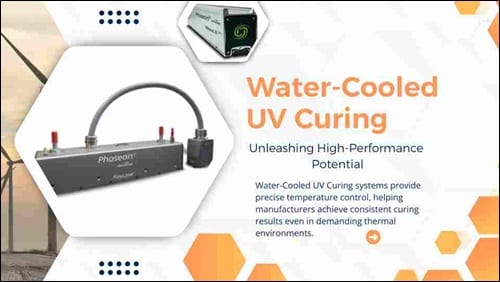
- Water cooled uv curing systems provide precise temperature control, helping manufacturers achieve consistent curing results even in demanding thermal environments.
- Stable temperature management helps protect material integrity by reducing problems such as warping, uneven curing, and poor adhesion.
- Durable construction and corrosion-resistant components allow water-cooled UV curing systems to perform reliably while reducing maintenance requirements.
- High-performance UV LED technology can accelerate curing cycles, improve production throughput, and reduce downtime.
- The long-term benefits of water-cooled UV curing include lower maintenance costs, improved energy efficiency, longer equipment life, and stronger overall return on investment.
- Industries such as automotive, electronics, printing, and advanced manufacturing are adopting water-cooled UV technology to meet increasing demands for speed, precision, and reliability.
- Future developments may introduce smarter sensors, improved cooling materials, automated monitoring, and greater energy efficiency, further expanding the performance potential of UV curing systems.
Why Water-Cooled UV Curing Systems Are Built for High Performance
Reliable Temperature Control in Demanding Environments
High-performance manufacturing depends on consistency. When curing temperatures fluctuate, materials may experience uneven results, poor adhesion, warping, or other quality problems. This is one reason water-cooled UV curing systems have become valuable in industries where precise thermal control is essential.
Unlike systems that rely entirely on air cooling, water-cooled solutions use circulating water to manage heat more effectively. This helps maintain a more stable operating temperature, allowing UV curing equipment to deliver predictable results throughout demanding production cycles.
Consistent temperature control can be especially important when working with heat-sensitive materials or applications that require precise curing conditions. By minimizing temperature variations, manufacturers can improve product quality while reducing the risk of production defects.
The benefits include:
- More consistent curing performance
- Better control of operating temperatures
- Reduced risk of material deformation
- Improved adhesion and finish quality
- Greater production reliability
For manufacturers focused on high-performance output, dependable thermal management is not simply an advantage. It can be a critical component of the entire production process.
Built for Durability in Harsh Industrial Conditions
Industrial environments can expose equipment to heat, dust, chemicals, and continuous operation. Under these conditions, durability becomes essential. Water-cooled UV curing systems are designed to withstand demanding production environments while maintaining reliable performance.
Many systems incorporate corrosion-resistant materials, advanced sealing methods, and durable components to extend operational life. Their cooling mechanisms also help manage the heat generated during intensive UV curing applications.
Key durability advantages include:
- Corrosion-resistant construction
- Effective heat management
- Reliable performance during extended operation
- Reduced maintenance requirements
- Longer equipment service life
This combination of durability and thermal control allows manufacturers to maintain production efficiency without constantly dealing with equipment-related interruptions.
How High-Performance UV LED Technology Transforms Productivity
Faster Curing for Higher Production Throughput
Speed is a major factor in modern manufacturing. Companies are constantly looking for ways to increase output without sacrificing quality. High-performance UV LED technology addresses this need by enabling rapid curing cycles that can be significantly faster than traditional curing methods.
When materials can be cured in seconds rather than minutes, manufacturers can potentially increase production capacity and shorten turnaround times. Faster curing can also reduce bottlenecks, allowing other stages of the production process to operate more efficiently.
The result can be:
- Increased production throughput
- Shorter curing cycles
- Reduced production bottlenecks
- Faster order fulfillment
- Less downtime between processes
For industries operating under tight deadlines, these advantages can have a meaningful impact on productivity and competitiveness.
Improving Efficiency While Reducing Downtime
Production downtime can be costly. Equipment interruptions, maintenance requirements, and inconsistent curing results can all affect profitability. Water-cooled UV curing systems can help address these challenges by combining efficient cooling with durable UV LED technology.
The ability to maintain stable operating temperatures helps protect system components and supports consistent performance. When equipment operates reliably for longer periods, manufacturers can spend less time dealing with unexpected interruptions.
Businesses can benefit from:
- More predictable production schedules
- Reduced equipment-related downtime
- Improved process consistency
- Greater operational efficiency
- Better use of manufacturing resources
High-performance curing is ultimately about more than speed. It is about creating a dependable production process that delivers consistent results at scale.
The Long-Term ROI of Water-Cooled UV Curing Systems
Lower Maintenance and Operating Costs
The initial investment in advanced curing technology is an important consideration for any manufacturer. However, evaluating only the purchase price can overlook the long-term financial benefits.
Water-cooled UV curing systems are designed for demanding applications and can offer long service life when properly installed and maintained. Durable components and efficient cooling may reduce the frequency of repairs and replacements, helping businesses control operating expenses over time.
Potential cost advantages include:
- Lower maintenance requirements
- Reduced replacement frequency
- Improved equipment longevity
- More efficient energy consumption
- Fewer production interruptions
When these benefits are considered over the entire life of the equipment, the initial investment may become easier to justify.
Balancing Initial Investment With Long-Term Value
Manufacturers should evaluate UV curing equipment based on total cost of ownership rather than upfront price alone. A lower-cost system that requires frequent maintenance or produces inconsistent results may ultimately become more expensive.
By contrast, a high-performance water-cooled system can provide value through reliable operation, improved productivity, and reduced downtime. The combination of increased throughput and lower operating expenses can contribute to a stronger return on investment.
For businesses focused on long-term growth, investing in reliable curing technology can support both production goals and financial performance.
How to Optimize Industrial Curing With Water-Cooled Systems
Real-World Applications Across Major Industries
Water-cooled UV curing technology is increasingly relevant across industries that require speed, precision, and consistent results.
Automotive Manufacturing:
Automotive applications often require reliable curing for coatings, paints, adhesives, and other materials. Water-cooled systems can help maintain stable operating conditions, supporting consistent finishes and strong adhesion.
Electronics Manufacturing:
Electronics production demands precision and repeatability. UV curing technology can be used for applications involving circuit boards, coatings, adhesives, and other components where rapid and controlled curing is essential.
Printing:
Printing operations benefit from fast ink curing and consistent results. UV LED curing can help improve ink adhesion, production speeds, and overall print quality.
Advanced Manufacturing:
Other industrial applications can benefit from rapid curing processes where production efficiency and material performance are critical.
These applications demonstrate the versatility of water-cooled UV curing technology and its ability to support modern manufacturing requirements.
Best Practices for Maximum Performance
Proper operation and maintenance are essential for achieving the full potential of any UV curing system. Even advanced equipment requires appropriate installation, monitoring, and routine care.
Manufacturers should consider the following best practices:
- Ensure proper system installation and alignment.
- Monitor cooling performance regularly.
- Inspect cooling circuits and critical components.
- Keep detailed maintenance records.
- Train operators in equipment operation and troubleshooting.
- Follow manufacturer recommendations for cleaning and servicing.
- Monitor curing performance and production quality over time.
Regular maintenance can help identify potential problems before they become major failures. Proper employee training is equally important because knowledgeable operators can recognize unusual performance and respond quickly.
By combining reliable equipment with effective maintenance practices, manufacturers can maximize system uptime and maintain consistent curing quality.
The Future of High-Performance UV Curing Technology
Smarter Sensors and Real-Time Monitoring
The next generation of UV curing systems is likely to become increasingly intelligent. Advanced sensors may allow manufacturers to monitor temperature, curing conditions, and equipment performance in real time.
Real-time monitoring can provide valuable information that helps operators identify potential issues before they affect production. Automated alerts and performance reports may also make it easier to optimize equipment settings and improve process consistency.
Potential developments include:
- Advanced temperature sensors
- Automated performance monitoring
- Real-time system diagnostics
- Predictive maintenance capabilities
- Data-driven process optimization
These improvements could make industrial UV curing systems more efficient, responsive, and easier to manage.
Greater Energy Efficiency and Customization
Future innovations may also focus on improving cooling efficiency and reducing overall energy consumption. New materials and improved system designs could allow manufacturers to achieve better thermal management while using fewer resources.
As UV curing technology continues to evolve, systems may become more adaptable to specific production requirements. This could allow manufacturers to customize curing parameters based on material type, production speed, and application needs.
The future of UV curing is therefore likely to focus on a combination of performance, efficiency, intelligence, and adaptability.
Why Water-Cooled UV Curing Is a High-Performance Investment
The advantages of water-cooled UV curing extend beyond faster production. These systems provide manufacturers with a combination of thermal stability, durability, productivity, and long-term efficiency.
By maintaining consistent operating temperatures, water-cooled systems can help protect material quality and improve curing reliability. High-performance UV LED technology can further accelerate production, while durable components may reduce maintenance demands and extend equipment life.
For industries such as automotive, electronics, and printing, these advantages can translate into:
- Higher production capacity
- More consistent product quality
- Reduced downtime
- Lower long-term operating costs
- Improved equipment reliability
- Greater flexibility for future manufacturing demands
As technology continues to advance, water-cooled UV curing is positioned to play an increasingly important role in high-performance industrial production.
FAQ
How do water-cooled UV curing systems compare with air-cooled systems?
Water-cooled systems generally provide more effective temperature management, making them well suited for demanding applications and extended operating periods. Their ability to control heat can contribute to more consistent curing results, particularly when precise temperature stability is important.
What maintenance practices should be prioritized?
Manufacturers should regularly inspect cooling circuits, check system components, monitor performance, and maintain accurate service records. Operators should also follow the equipment manufacturer’s maintenance recommendations to support reliable operation.
Can water-cooled UV curing systems be integrated into existing production lines?
In many cases, these systems can be integrated into existing manufacturing processes. Businesses should evaluate equipment compatibility, available space, cooling requirements, and production specifications before installation.
What industries benefit most from water-cooled UV curing?
Automotive, electronics, printing, coatings, adhesives, and other advanced manufacturing industries can benefit from the technology. Applications that require rapid curing, precise temperature control, and consistent production quality are particularly well suited to these systems.
Is the initial investment in a water-cooled UV curing system worth it?
The answer depends on the application’s production requirements and total cost of ownership. Businesses should consider not only the initial purchase price but also potential savings from reduced downtime, lower maintenance, improved productivity, and longer equipment life.
How can businesses measure performance improvements after upgrading their curing system?
Businesses can compare production speed, curing consistency, defect rates, downtime, maintenance expenses, and energy consumption before and after installation. Tracking these metrics can help determine whether the new system is delivering measurable operational improvements.
What future innovations could improve UV curing technology?
Future developments may include smarter sensors, real-time monitoring, predictive maintenance, improved cooling materials, automated process controls, and more energy-efficient system designs. These advancements could make UV curing technology even more precise and adaptable.
What are the most important factors when selecting a water-cooled UV curing system?
Businesses should evaluate curing speed, cooling capacity, UV output, system durability, compatibility with existing equipment, maintenance requirements, energy efficiency, and manufacturer support. Selecting a system based on the specific application is essential for achieving the best long-term results.