Cyber attacks are not a matter of “if” — they are a matter of “when.”
The real difference between a secure organization and a vulnerable one is how quickly threats are detected and handled.
This is where a Security Operations Center (SOC) becomes critical.
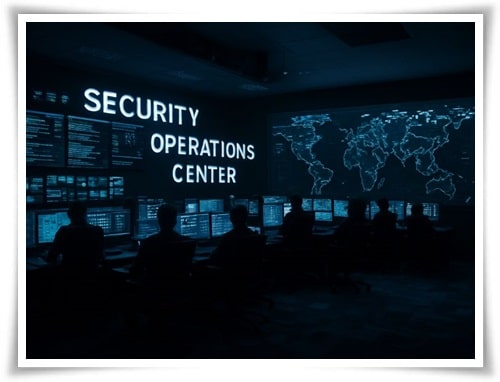
A SOC acts as the central command hub for monitoring, detecting, and responding to cybersecurity incidents in real time.
Instead of reacting after damage is done, organizations with a SOC can actively defend against threats as they happen.
In this guide, you’ll learn what a SOC is, how it works, its components, benefits, challenges, and why it is essential for modern cybersecurity.
What Is a Security Operations Center (SOC)?
A Security Operations Center (SOC) is a centralized team and facility responsible for monitoring and managing an organization’s cybersecurity posture.
It combines people, processes, and technology to detect and respond to threats.
The SOC continuously monitors systems, networks, and endpoints for suspicious activity.
For technical reference, see this SOC guide
Simple Explanation
Think of a SOC as a cybersecurity control room.
It watches everything happening in your digital environment and alerts you when something goes wrong.
Why a SOC Is Important
Modern cyber threats are complex and fast-moving. Without centralized monitoring, they can go unnoticed.
1. Real-Time Threat Detection
Identify attacks as they happen.
2. Faster Incident Response
Minimize damage by responding quickly.
3. Continuous Monitoring
Ensure 24/7 security visibility.
4. Improved Security Posture
Strengthen overall defense mechanisms.
5. Compliance Support
Meet regulatory requirements.
Without a SOC, organizations rely on reactive security, which is far less effective.
How a SOC Works
A SOC operates through a structured process.
1. Data Collection
Collects logs and data from multiple sources:
- Endpoints
- Networks
- Applications
- Cloud systems
2. Monitoring
Continuously monitors activity for anomalies.
3. Detection
Identifies potential threats.
4. Analysis
Investigates alerts to determine severity.
5. Response
Takes action to contain and eliminate threats.
This process runs continuously to ensure security.
Key Components of a SOC
People
Security analysts, engineers, and incident responders.
Processes
Defined procedures for detecting and responding to threats.
Technology
Tools like SIEM, EDR, and XDR.
These components work together to create an effective SOC.
SOC Roles and Responsibilities
Tier 1 Analysts
Monitor alerts and perform initial investigations.
Tier 2 Analysts
Handle complex incidents and deeper analysis.
Tier 3 Experts
Conduct advanced threat hunting.
SOC Manager
Oversees operations and strategy.
Each role plays a critical part in maintaining security.
SOC vs SIEM
These terms are often confused but are different.
- SOC: The team and operations center
- SIEM: The tool used within SOC
Learn more in our SIEM guide
Tools Used in a SOC
- SIEM platforms
- EDR solutions
- XDR systems
- Threat intelligence tools
These tools provide visibility and automation.
Benefits of a SOC
Enhanced Security
Detect and respond to threats effectively.
Reduced Risk
Minimize potential damage.
Better Visibility
Understand security posture.
Faster Response
React quickly to incidents.
These benefits make SOC essential for modern organizations.
Challenges of a SOC
- High operational cost
- Skilled workforce requirement
- Alert fatigue
- Complex infrastructure
Effective management is key to overcoming these challenges.
Types of SOC
In-House SOC
Managed internally by the organization.
Outsourced SOC
Managed by third-party providers.
Hybrid SOC
Combination of in-house and outsourced services.
Organizations choose based on their needs and resources.
Best Practices for Building a SOC
Define Clear Objectives
Set goals for security operations.
Invest in the Right Tools
Use SIEM, EDR, and XDR effectively.
Train Your Team
Ensure skilled personnel.
Automate Where Possible
Reduce manual workload.
Continuously Improve
Adapt to evolving threats.
Following these practices improves SOC performance.
Future of SOC
SOC is evolving with technology.
- AI-driven automation
- Cloud-based SOC solutions
- Integration with XDR platforms
These advancements will make SOC more efficient and scalable.
Conclusion
Security Operations Center (SOC) is the backbone of modern cybersecurity operations.
It provides real-time monitoring, threat detection, and incident response.
Without a SOC, organizations struggle to manage complex security environments effectively.
Building a SOC is a critical step toward strong and proactive cybersecurity.
Frequently Asked Questions
What is a SOC in cybersecurity?
A centralized team that monitors and manages security.
Is SOC only for large companies?
No, small businesses can use outsourced SOC services.
What tools are used in SOC?
SIEM, EDR, and XDR tools.
Does SOC prevent attacks?
It detects and responds to threats.
Is SOC expensive?
It can be costly but provides strong security benefits.
Call to Action
Strengthen your cybersecurity strategy by implementing a SOC and gaining real-time control over your security environment.